Sunday, August 3, 2014

Questions about Worm Cycles in Goats

The Story

We love our small herd of American Alpine dairy goats. Edna, pictured to the right, is a fantastic Momma goat. She likes to move slowly and has her own pace, which can sometimes frustrate impatient human beings. 

Edna is a kind, gentle, and loving goat. She generously provides our family with 1/2 a gallon of milk every morning. She has been producing this milk for more than 18 months. We are thankful for Edna and love her. As her human caretakers, we are also responsible for the care of Edna and her goat family. That means it is our job as the human to do research and learn as much as possible about goat husbandry.

The Problem

Amicus is a dear American Alpine goat-raising friend who lives nearby. One of Amicus's goats became ill with a runny nose. She invited a Veterinarian to her property. The Vet ran fecal tests over a two week span and told Amicus the worm count was increasing. The Vet suggested the data argued that Amicus' herbal deworming treatment was failing that she should consider the traditional chemical deworming methods. 

I was not surprised that a Vet, trained at a Chem-Ag university, would quickly advocate for chemicals. Amicus already told me the Vet was surprised when Amicus told her (on the Vet's first visit to Amicus' farm) she did not use them. However, I was not buying the Vet's fecal test conclusions yet. I already knew that research published at Fias Co Farms (where we buy our herbal dewormers) had convinced Amicus and I of the efficacy of herbal deworming. Comparing Alternatives for Controlling Internal Parasites in Dairy Goats Herbal vs. Chemical, Chrissy Orr. 

BioDynamics and Lunar Cycles

When Amicus and I were talking about what to do, I wondered if the Vet's assumptions about the cause and effect of the increase might have been associated with the lunar cycle instead of Amicus's herbal treatment method. I took to the Internet to confirm my hunch by researching internal parasitic worm life cycles. (Oh, the fun!!!!) 

Turns out my speculation was confirmed by biodynamic farming researchers.  First, I found an article by Jean Duval about de-worming goats.
"According to a traditional French practice, deworming treatments are performed preferably when there is a new moon. The worms are more active at this time and therefore easier to dislodge. On the other hand, Rudolf Steiner, the father of biodynamic agriculture, recommends performing deworming treatments during a full moon."

Ecological Agricultural Projects, AGRO-BIO - 370 - 04E, THE CONTROL OF INTERNAL PARASITES IN RUMINANTS, Jean Duval, agronomist, M.Sc. (Jan. 1994)

Next, I found a biodynamic website, BIO-DYNAMIC ASSOCIATION OF INDIA (BDAI), The Rhythms & their recommended Farming Activities, that recommended de-worming animals homeopathically for parasites beginning three days before the full moon. 
Drench animals for internal parasites, on an empty stomach with, for example, garlic and cider vinegar. (48 hours before Full Moon)
Then, I found a horse husbandry site that cited homeopathic veterinarian C. Edgar Sheaffer, VMD. It advocated for worming in harmony with lunar cycles. Quoting Sheaffer: 
most parasitic conditions can be addressed best with a natural wormer, used between the new and full moons.
The Holistic Horse, Worming in Harmony with Lunar Cycles

Dr. Sheaffer confirmed that the lunar cycle must be considered when evaluating fecal samples in horses:
Attention to lunar cycles is also important to fecal samples, Dr. Sheaffer says.  "We can't get lulled into a false sense of security with fecal counts." The most successful assessments collect fecal samples between . . . the new-to-full moon phases, when parasite egg-laying is at its peak. Samples taken between [the full-to-new moon phases] may not show eggs because it may not jibe with a parasite egg-laying cycle. Daily fecals, and quantitative egg counts could perhaps best document this cycle in an individual horse.
Id. It stands to reason that the same consideration applies for goats husbandry.

CONCLUSION

The Vet's assumption about worm count in Amicus's herd was premature and unscientific. Depending on when the sample was taken, the lunar cycle would have influenced the fecal test data. To reach an accurate conclusion, Amicus should analyze fecal samples taken at the same time during the new-to-full moon cycles.
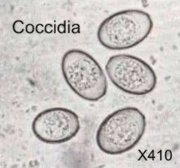

In addition, individual worm species may have different life cycles. A farmer should identify the specific worm species with fecal samples, a microscope, and photographs before taking definitive actions.

Timing of herbal treatment is important. There is some conflicting information. Considering everything I have learned, the best time to treat is after the new moon and before the full. This period gives the best opportunity to interrupt the egg cycle of the internal parasites.

Finally, our current herbal only treatment may not be the most efficacious way to treat our goats. Maybe Amicus' Vet was right in this respect. 

Dr. Sheaffer recommends alternating between herbal and homeopathic worming treatments for horses. Therefore, it stands to reason that we should consider incorporating alternating homeopathic and herbal treatments into our goat deworming plan. 

Monday, July 28, 2014

I stayed in a downtown Chicago youth hostel

This weekend I stayed two nights in a downtown Chicago hostel, the Parthenon. My partner said it was too dangerous and that I would get bedbugs and diseases. My partner was way, way wrong. I had a great experience.

The hostel was in Greek town. It was operated by a welcoming and fastidious Greek family. The entire place was tidy, uncluttered, and extremely clean.

My room was on the third floor. A spiral stair led upwards past unique art. I humped my backpack up the stairs to the room.

My room was about 250 square feet in size and it had three sets of bunks (6 racks). My rack was on the top. I'm 6 foot and I took up the entire length with only about 6 inches to spare on each end. Just the right size.

I never talked to my five roommates except brief whispered hellos as we grabbed showers and wash-ups. My roommates were all quiet, polite, and considerate people. The only minor incident occurred yesterday morning. As I stuffed my pack, my roommate awoke with a shout. Thinking I disturbed him, I apologized. He said something in German, and then said, "nightmare."

The hostel had communal bathrooms and showers. If you don't like meeting people while you're naked in the shower, you should not attempt this hostel thing. But if you don't care or like a little adventure, it is no biggie and actually makes for a good story.

In the mornings, the Parthenon serves free breakfast.

If you're up for adventure in Chicago, this is the place to stay. Here are some pictures.


Sunday, July 20, 2014

My Visit to the Windy City Weasels

Next week, I am making a trip to Chicago to see some of my Dip friends and play in Weasel Moot VIII. I expect to get stabbed and totally slaughtered in Chicago as far as the Dip goes, but nevertheless, am anticipating the fun will be huge. I am using this blog post as a means to keep a running log of my trip and to store information I might need to access.

I am trying out taking a backpack to a Chicago youth hostel as an adventure and because the cost of hotels in downtown Chicago is really high. Two nights at a hotel are approximately $400 and that is for a two star.

Today I booked a room through HostelBookers.Com to stay at the Chicago Parthenon Hostel. It is a 8-bed dorm style room at a cost of $34 per night. The Hostel is in a Greek neighborhood. A picture from Google Street view is embedded below.


My friend Jim O'Kelley bought Cubs tickets for Friday afternoon and I am looking forward to going to Wrigley Field again and enjoying a nice afternoon of baseball (Cubs v. Cards). (I am a Braves fan. Baseball is my favorite sport in the summer.)

Afterwards or maybe during the game, I may test out a couple Chicago pale ales. They have some good micro-breweries in the Chicago area.

If the Friday-night, Big-city festivities are not too much for my old bones, I am hoping to wake up and go to the Dip tournament. It starts early on Saturday morning and runs through Sunday.

From the Hostel, it looks like I can catch an El train at the UIC Halstead Station and ride it to the Clark Lake Station. There, I disembark and walk north across the Chicago River and about another two blocks to the fancy Hampton Inn and Suites. There, Weasel Moot happens.

Please comment for any inside Chicago tips about my planned itinerary.  For example, I suspect the Greek restaurants around this hostel are pretty decent and might be worth exploring.

Here is a map to the Dip tourney.
Here is a map to Wrigley from the Hostel. Take blue line to Jackson Blue. Switch to the red line. Ride to Addison.
]
Here's a map from the airport to the hostel. Blue line all the way.

Saturday, July 19, 2014

In 2013 I named my goat after Stephen Garcia

On April 9, 2013, two baby goats were born on our homestead. As soon as I saw his face, I named one goat after Stephen Garcia.

Garcia is an enigmatic figure. Steve Spurrier's first big-time quarterback recruit, Garcia came to South Carolina from Tampa, Florida, as a brash, long-haired, five-star player. During his career he played extremely well at times. In 2009, he was the starting quarterback when the Gamecocks began their current five game winning streak over Clemson. In 2010, he led the Gamecocks to their first and only SEC East football championship.

However, on October 11, 2011, then Athletic Director Eric Hyman, who had no patience for Garcia's antics, kicked Garcia off the Gamecock football team for a failure to follow, "established guidelines." Garcia Dismissed from Football Team. The sudden and shocking dismissal followed a tumultuous career of highs and lows. The lows in many cases involved bad luck and poor choices associated with Garcia's love of partying. His love of fun did not correlate well with also existing under the media microscope trained on starting SEC quarterbacks.

The Gamecock fanbase was divided over Garcia. Some fans were critical or upset because Garcia's partying allegedly meant that he was unable to meet high expectations associated with his five-star talent. Others were more understanding and sympathetic, recollecting back to their own lives as students at the University of South Carolina. I am one of the latter. I have a soft spot in my heart for the Stephen Garcia's of this world. 

This past week, I was thrilled when Garcia emerged as a celebrity at the unofficial beginning of college football -- SEC Media Days. (SEC Media Days is a huge event for college football fans in the deep south.) A  few weeks before SEC Media Days started, a self-described "non-corporate" sports media site, Saturday Down South, hired Garcia as a reporter/blogger. This was a brilliant PR move by SDS! Garcia made a huge splash at SEC Media Days and the SDS brand is exploding.  


SDS took full advantage of Garcia's celebrity status, and plans a Garcia clothing line to go with his video blogging. As a celebrity-reporter, Garcia already has an avid following. Garcia was interviewed over 150 times by reporters, bloggers, and broadcasters covering SEC Media Days. Seemingly everyone wants a piece of Stephen Garcia.


I am so happy to see Garcia succeed! I named my goat after Garcia more than a year before he burst on the scene again this July.  Thus, with this post, I am claiming my status as the first generation of true Stephen Garcia fans. I am publishing this and tweeting to SDS hoping to snag one of the Viva Garcia T-shirts! 

Besides the fact I am a huge Stephen Garcia fan, here's a clue about why I named my goat Garcia after Stephen Garcia. 


Viva Garcia. Viva Saturday Down South.

Monday, July 14, 2014

#HomesteadProblems What To Do With The Young Roosters

I have a rooster problem and need help. It wouldn't be as urgent a problem except our strong Wyandotte rooster died suddenly leaving his sons to a tyrannical reign over our five hens. Consider my story and please comment so I may find a solution.

Katrina and I have raised chickens here in Tryon, North Carolina, for about two years now.  We have good egg-laying chickens and picked out the best  eggs in our flock to incubate, hatch, and raise. However, the three eggs we hatched (this spring) all were roosters. Two of the roosters are nearly identical twin hybrids except one rooster has golden earrings, and one silver. I chased them into their coop this afternoon and took the picture above. 

As I mentioned, just as these young roosters were starting to crow, their father (a Wyandotte) suddenly died. (We think it might have been a poisonous snake or insect.) That left the hens temporarily in charge until the young hybrid roosters got big.

Their father, the Wyandott rooster who died, was an excellent rooster. He was respectful of the hens, frequently locating food for them and always looking to defend them from harm. He interposed himself between the threat (whether dog or human) and the hens. He once intervened to repel a dog attack, leaving him with a severe wound (from which he recovered). His intervention likely prevented other hens from dying (one died). The young hybrid roosters really had no time to learn discipline from their father.  


We also hatched a pure-bred Black Copper Marans (BCM) egg. This egg came from dear homestead friends who raise BCM chickens. The BCM is a wonderful breed. We have one BCM hen, and she lays the highest quality chocolate colored eggs. Her eggs are easily the most beautiful of all our chickens. Naturally, instead of another egg-laying hen, when this egg hatched we got a third rooster. (See picture.)

The two young hybrid roosters are now dominant and are terrorizing the hens. Neither has yet become dominate over the other. They prefer to exercise their dominion over the hens in tandem. This is weird and brutal. You hear a hen scream, and see the second hybrid rooster hurry so he can join in the action. It is no wonder that most of our hens just hide out in the coop all day long.

Because of the situation, we decided to cull the two hybrid roosters. They are great beautiful roosters, but on balance, we believe the BCM rooster would make a more awesome sire.  

This is all just background for the problem. Ok, here it is. What are your opinions on what we should do with the hybrid roosters?  

1. Should we sell them on craigslist; or 
2. Eat them.

One final factor to consider before you comment. We think the quality of the meat will be excellent. These birds have been raised on non-GMO grain and free range food. We expect the meat to be different from anything you can buy at a grocery store, and we are curious to taste it. 

Saturday, June 14, 2014

Save Money By Growing Your Medicine: Starting A Maitake Mushroom Patch


The Japanese word "maitake" means "dancing mushroom" because people in ancient times were said to dance for joy when they found these mushrooms, which were literally worth their weight in silver. In North America it is called Hen of the Woods because its appearance looks like the ruffled feathers of a chicken.

Now, we will try our hand at growing the dancing mushroom.

Why Grow Maitake

Even Web MD touts the health benefits of Maitake mushrooms.
Maitake mushroom is used to treat cancer and also to relieve some of the side effects of chemical treatment (chemotherapy) for cancer. It is also used for HIV/AIDS, chronic fatigue syndrome (CFS), hepatitis, hay fever, diabetes, high blood pressure, high cholesterol, weight loss or control, and infertility due to a condition called polycystic ovary syndrome.
We had pretty good success with our Shiitake mushroom log culture inoculation last spring. Thus, I am hopeful that our temperate zone 7 climate will favor the maitake.

There is a good bit of money savings associated with good health.  Adding home grown mushrooms to your diet of other garden foods, saves money. If nothing else, that is another expense you have eliminated. If it is a pharmaceutical expense, then all the better. A lot of those chemicals they sell just make us dependent and weak due to side effects, and there is often a natural alternative that is just as good with fewer unintended consequences.

Procedures for Growing

It may be that the log culture used for growing shiitake will not work so well with maitake. My research indicates that the best culture for naturally growing maitake (and reishi) mushrooms is on decomposing oak stumps. We do not have any freshly cut stumps presently so we are trying log culture. 

First, I ordered some spawn from Mushroom Mountain in Liberty, South Carolina. The mycelia produced locally will give me a better chance of successfully growing this mushroom. As you can see from the picture above, the mycelia are contained in small dowels.  

About three weeks before the spawn arrived, I cut a large branch from my white oak tree, and cut it further into three three foot-long sections.  The log was between 5 - 8 inches in diameter.

Next, I used a drill to cut holes the same size as the dowels in a diamond pattern around the logs. The holes were about 4-5 inches apart. The idea is that the mycelium will spread throughout the wood and produce fruit next year or maybe two years from now.

I tapped the dowels into the holes and sealed the top with melted bees' wax.  It's rainy season here in western North Carolina. I set the logs against the north side of a large white oak. This should keep them protected from the sun and the prevailing wind. You want the logs to stay moist to promote growth of the maitake mycelium. 

The best practice is to bury the logs in sandy soil so that they will stay moist. I will probably do this later when I figure out where I would like to set up my maitake patch.

Sunday, June 8, 2014

Poison Ivy as a Productive Crop

One thing that I have noticed about poison ivy is that it produces quite a bit of organic material. The trick is using the stuff in a productive way. In this post, we look at how we set up a system to use goats to convert a poison ivy patch to food.

Most people give up on making use of poison ivy and spray it with a herbicide. Aside from the health risk, there are three practical problems with this approach.

          1. Herbicide detrimentally affects other plants and animals;
          2. Herbicide costs a lot of money for each application, and takes a lot of energy to apply; and
          3. You lose the stored energy manifested in the poison ivy plant.

Besides, we are natural gardeners and do not want to use herbicides on our place. We don't like it.

We bought the following supplies for our temporary fence project:

1. From Timeless Fencing, fifty 40" Step-In Posts.

2. From Premier Sheep Supplies, three 660' spools of 4.5 Intellirope electric fence cord, three Supareel T-post brackets, and a Patriot P10 battery energizer kit.

3. From the local Walmart, a 12 volt deep cycle marine battery.

I know these were capital expenses that probably exceeded the cost of a few gallons of Roundup. But unlike Roundup, this was a one time expense, it is natural, and using them, we will make productive use of poison ivy.


To set up the system, we connected one end of the Intellirope to a post. Then, using the spools, we strung the wire around the circuit hanging three strands on the Timeless temporary fence posts. At the end of the circuit, we hung the rope spools on a T-post using the Supareel brackets. Next, we installed the ground rod, wired the strands to each other, and hooked up the energizer, fence, and battery. The electric rope fence energized as soon as the clamp hit the post.

Our goats are very happy to be out of the sun. They are enjoying the browse in the wooded area and eating a lot of poison ivy. They love it.

I will post an update later to show you how the plan worked.

In the future, we can move our temporary electric fence and goats around and into any 500 foot patch of brambles on our place and it will not cost us anything but the time.

We now look at poison ivy as a free food source for our goats. The ivy plant converts solar energy into lots of leaves and vines. The goats convert the poison ivy leaves and vines into meat and milk.

Voila!

Poison ivy is a productive crop.

June 14, 2014 UPDATE: Three strands does not seem to be enough to contain my does in the electric fence area. They just get a running start and dodge through the lower electric rope lines. I am ordering a fourth spool, to see if that will stop them from escaping. 

The other possibility is the Patriot P10 may not pulse frequently enough to deter goats. It is rated at 40 pulses per minute. This is good for preserving the battery, but makes the charger less effective if the goats can time out and scoot through between pulses. 

My goats generally are not escape artists. I think there may be some bugs that are bothering them, and perhaps the shelter situation is less than what they are used to experiencing. They are pretty spoiled goats who like to hang out in a horse barn.