Tuesday, September 30, 2014

Identification of our Chestnut Trees: I am calling them hybrids for now.


Here are pictures of our Chestnut tree elements.  The leaf looks like a combination of the American and Chinese variety.

Our Tree leaf is to the right

From left to right: American, Chinese, our chestnut tree burr

From left to right: American, Chinese, our variety.
Based upon review of these images and our tree, it looks like we have a hybrid chestnut tree. The leaf in the top picture resembles both varieties. The lentles in the second picture look like American Chestnut lentles. The burrs resemble the Chinese chestnut variety. The nuts are big like Chinese chestnuts, but they are hairy like the American variety.

I am calling our trees hybrid chestnuts until I can get the definitive word from the American Chestnut foundation.  

The leaves of my chestnut tree will be submitted for analysis via the instructions in this link.


Saturday, September 13, 2014

The Useful and Pretty Rose of Sharon Bush


On our homestead, we are well pleased with the summer flowering plant species, Hibiscus Syriacus. The plant is from the Malvaceae family of course from the Plantae kingdom. The plant is species native to Syria, as is indicated by its name. Below are pictures of our plant taken in September 2014.


Our hibiscus syriacus is identified from the cultivar as, "Notwoodone" or "LAVENDER CHIFFON® - Rose of Sharon." This post is written to delve into the meat of this useful and pretty plant.

The flowers of hibiscus warn of the waning summer. Here in North Carolina, we sometimes view this with relief! It is also a reminder that we need to prepare ourselves for approaching wintertime.

Interestingly, the plant will grow beneath the allopathic Black Walnut (Juglans nigra) which inhibits growth of many plants.

Hibiscus Syriacus is favored by professional landscapers as a hedge plant.  It is a low maintenance plant with pleasing flowers.

Uses:

The young leaves and flowers of Hibiscus Syriacus  are edible in salads. The leaves are less palatable than the flowers, which have a mild flavor. They also can be made into a tea.

Hibiscus Syriacus is a medicinal herb. 
A decoction of the flowers is diuretic, ophthalmic and stomachic. It is also used in the treatment of itch and other skin diseases, dizziness and bloody stools accompanied by much gas. A decoction of the root bark is antiphlogistic, demulcent, emollient, febrifuge, haemostatic and vermifuge. It is used in the treatment of diarrhoea, dysentery, dysmenorrhoea and dermaphytosis.

Medicinal Herbs

Propagation:

According to the Missouri Botanical Garden, Hibiscus Syriacus is, "[e]asily propagated by stem cuttings." Stem cuttings with produce a clone of the mother plant. The plant also will grow from her seeds, but she may not be true to type in terms of flower color.


Thursday, September 11, 2014

Chestnut Tree identification

That is highly unlikely. But if we do, our trees could be the champions if they can pass along the resistant genetics. (Something other would-be champions have not been able to do at this stage.)

First we found an excellent Internet chestnut tree identification resource: The American Chestnut Foundation. Using the site, we compiled the following data to undertake this project.

Wednesday, August 13, 2014

Why I Need to Know if My Trees Are Champion American Chestnuts

We have two large, fruitful chestnut trees on our homestead. 

In the early 20th century a lethal Asian fungus infestation (known as the chestnut blight) swept across native habitat of the American chestnut tree and wiped out about 4 billion American chestnuts.  In circa 1925, the fungus reached our ecosystem in western North Carolina killing the American chestnuts here.

Most chestnuts growing now are Chinese chestnuts or hybrids. The Chinese chestnut species has an immunity to the blight. However, the American Chestnut Foundation is using science to seek out and restore blight-resistant American chestnut trees to our biome.

The first option for the American Chestnut restoration project is to locate naturally-resistant all American (not hybrid) trees. Champion trees could save the species. A champion would have a natural immunity to the blight, and would be capable of passing that immunity down to her children through her seeds. Here is an article about the ACF restoration project: Restoring the American Chestnut Tree. Another good piece is Chestnut Champions by Meghan Jordan, TACF, Page 12. 

There is only a very slight possibility we have American chestnuts on our homestead. There is an even smaller probability still that our chestnuts are champions. But even the faintest possibility of a champion chestnut tree on our homestead creates a duty to check. That is why we must identify our chestnut trees. We owe it to our ancestry and progeny. Stay tuned.

Sunday, August 3, 2014

Questions about Worm Cycles in Goats

The Story

We love our small herd of American Alpine dairy goats. Edna, pictured to the right, is a fantastic Momma goat. She likes to move slowly and has her own pace, which can sometimes frustrate impatient human beings. 

Edna is a kind, gentle, and loving goat. She generously provides our family with 1/2 a gallon of milk every morning. She has been producing this milk for more than 18 months. We are thankful for Edna and love her. As her human caretakers, we are also responsible for the care of Edna and her goat family. That means it is our job as the human to do research and learn as much as possible about goat husbandry.

The Problem

Amicus is a dear American Alpine goat-raising friend who lives nearby. One of Amicus's goats became ill with a runny nose. She invited a Veterinarian to her property. The Vet ran fecal tests over a two week span and told Amicus the worm count was increasing. The Vet suggested the data argued that Amicus' herbal deworming treatment was failing that she should consider the traditional chemical deworming methods. 

I was not surprised that a Vet, trained at a Chem-Ag university, would quickly advocate for chemicals. Amicus already told me the Vet was surprised when Amicus told her (on the Vet's first visit to Amicus' farm) she did not use them. However, I was not buying the Vet's fecal test conclusions yet. I already knew that research published at Fias Co Farms (where we buy our herbal dewormers) had convinced Amicus and I of the efficacy of herbal deworming. Comparing Alternatives for Controlling Internal Parasites in Dairy Goats Herbal vs. Chemical, Chrissy Orr. 

BioDynamics and Lunar Cycles

When Amicus and I were talking about what to do, I wondered if the Vet's assumptions about the cause and effect of the increase might have been associated with the lunar cycle instead of Amicus's herbal treatment method. I took to the Internet to confirm my hunch by researching internal parasitic worm life cycles. (Oh, the fun!!!!) 

Turns out my speculation was confirmed by biodynamic farming researchers.  First, I found an article by Jean Duval about de-worming goats.
"According to a traditional French practice, deworming treatments are performed preferably when there is a new moon. The worms are more active at this time and therefore easier to dislodge. On the other hand, Rudolf Steiner, the father of biodynamic agriculture, recommends performing deworming treatments during a full moon."

Ecological Agricultural Projects, AGRO-BIO - 370 - 04E, THE CONTROL OF INTERNAL PARASITES IN RUMINANTS, Jean Duval, agronomist, M.Sc. (Jan. 1994)

Next, I found a biodynamic website, BIO-DYNAMIC ASSOCIATION OF INDIA (BDAI), The Rhythms & their recommended Farming Activities, that recommended de-worming animals homeopathically for parasites beginning three days before the full moon. 
Drench animals for internal parasites, on an empty stomach with, for example, garlic and cider vinegar. (48 hours before Full Moon)
Then, I found a horse husbandry site that cited homeopathic veterinarian C. Edgar Sheaffer, VMD. It advocated for worming in harmony with lunar cycles. Quoting Sheaffer: 
most parasitic conditions can be addressed best with a natural wormer, used between the new and full moons.
The Holistic Horse, Worming in Harmony with Lunar Cycles

Dr. Sheaffer confirmed that the lunar cycle must be considered when evaluating fecal samples in horses:
Attention to lunar cycles is also important to fecal samples, Dr. Sheaffer says.  "We can't get lulled into a false sense of security with fecal counts." The most successful assessments collect fecal samples between . . . the new-to-full moon phases, when parasite egg-laying is at its peak. Samples taken between [the full-to-new moon phases] may not show eggs because it may not jibe with a parasite egg-laying cycle. Daily fecals, and quantitative egg counts could perhaps best document this cycle in an individual horse.
Id. It stands to reason that the same consideration applies for goats husbandry.

CONCLUSION

The Vet's assumption about worm count in Amicus's herd was premature and unscientific. Depending on when the sample was taken, the lunar cycle would have influenced the fecal test data. To reach an accurate conclusion, Amicus should analyze fecal samples taken at the same time during the new-to-full moon cycles.


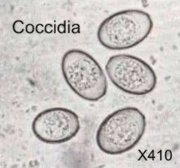
In addition, individual worm species may have different life cycles. A farmer should identify the specific worm species with fecal samples, a microscope, and photographs before taking definitive actions.

Timing of herbal treatment is important. There is some conflicting information. Considering everything I have learned, the best time to treat is after the new moon and before the full. This period gives the best opportunity to interrupt the egg cycle of the internal parasites.

Finally, our current herbal only treatment may not be the most efficacious way to treat our goats. Maybe Amicus' Vet was right in this respect. 

Dr. Sheaffer recommends alternating between herbal and homeopathic worming treatments for horses. Therefore, it stands to reason that we should consider incorporating alternating homeopathic and herbal treatments into our goat deworming plan. 

Monday, July 28, 2014

I stayed in a downtown Chicago youth hostel

This weekend I stayed two nights in a downtown Chicago hostel, the Parthenon. My partner said it was too dangerous and that I would get bedbugs and diseases. My partner was way, way wrong. I had a great experience.

The hostel was in Greek town. It was operated by a welcoming and fastidious Greek family. The entire place was tidy, uncluttered, and extremely clean.

My room was on the third floor. A spiral stair led upwards past unique art. I humped my backpack up the stairs to the room.

My room was about 250 square feet in size and it had three sets of bunks (6 racks). My rack was on the top. I'm 6 foot and I took up the entire length with only about 6 inches to spare on each end. Just the right size.

I never talked to my five roommates except brief whispered hellos as we grabbed showers and wash-ups. My roommates were all quiet, polite, and considerate people. The only minor incident occurred yesterday morning. As I stuffed my pack, my roommate awoke with a shout. Thinking I disturbed him, I apologized. He said something in German, and then said, "nightmare."

The hostel had communal bathrooms and showers. If you don't like meeting people while you're naked in the shower, you should not attempt this hostel thing. But if you don't care or like a little adventure, it is no biggie and actually makes for a good story.

In the mornings, the Parthenon serves free breakfast.

If you're up for adventure in Chicago, this is the place to stay. Here are some pictures.